
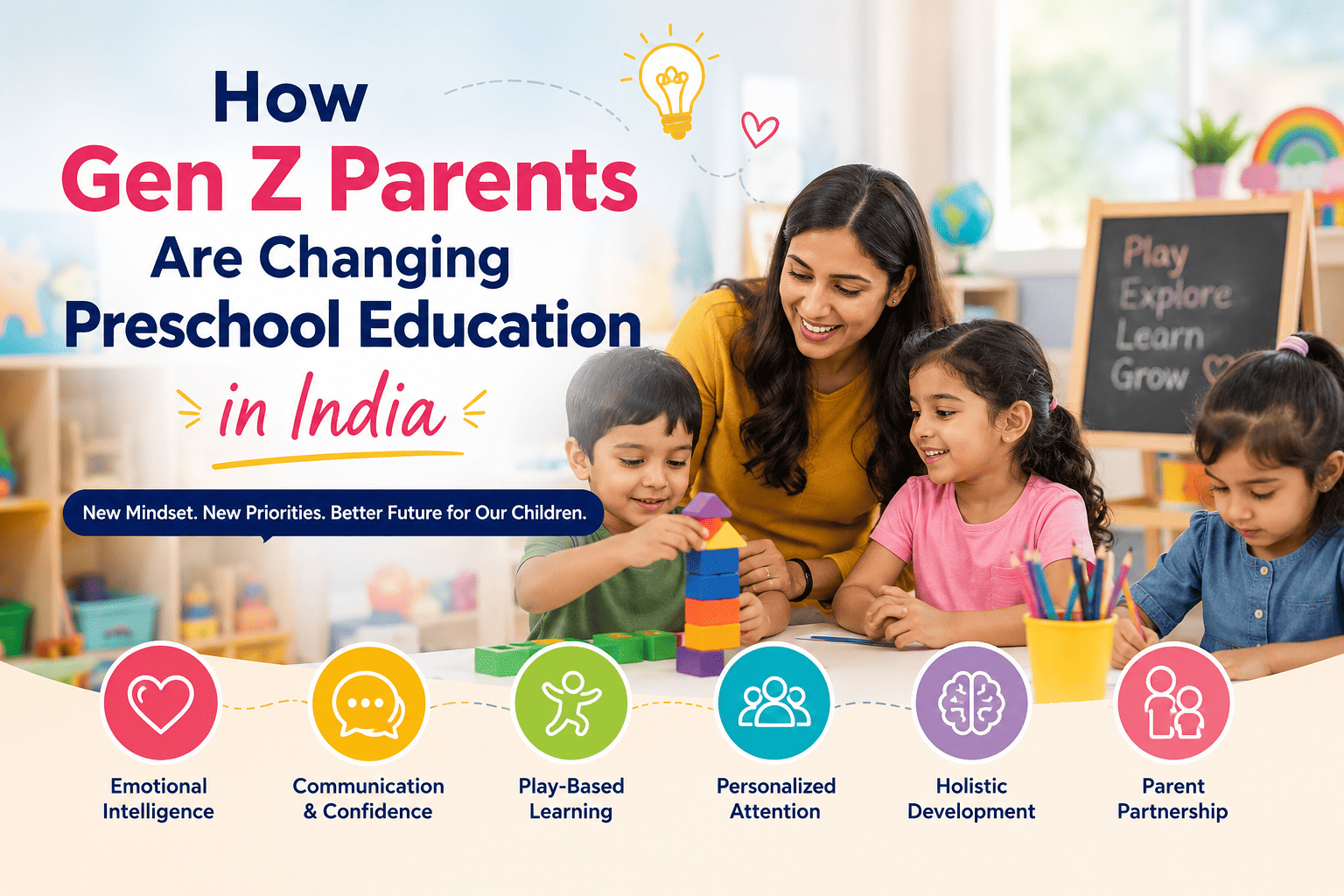
The world of parenting is evolving rapidly, and nowhere is this more visible than in preschool education. A new generation of parents—commonly referred to as Gen Z parents—is beginning to influence how young children are raised, taught, and prepared for the future. Born roughly between 1997 and 2012, Gen Z parents grew up in the digital era, experienced rapid technological advancements, and witnessed significant shifts in education, work culture, and social values.
As they start families of their own, they are bringing fresh expectations to early childhood education. Traditional preschool models that focus primarily on academic preparation are no longer enough. Today’s parents want learning environments that nurture creativity, emotional intelligence, communication skills, confidence, and holistic development.
In India, this shift is creating a new era of preschool education. Schools are adapting their teaching methodologies, classroom experiences, and parent engagement strategies to meet the expectations of modern families.
Let’s explore how Gen Z parents are changing preschool education in India and what this means for the future of early childhood learning.
Who Are Gen Z Parents?
Gen Z parents are digital natives. Unlike previous generations, they grew up with smartphones, social media, online learning platforms, and instant access to information.
Their parenting style is influenced by:
- Easy access to educational research
- Greater awareness of child psychology
- Focus on mental health and emotional well-being
- Technology-driven lifestyles
- Desire for work-life balance
- Preference for personalized experiences
Instead of relying solely on traditional parenting advice, Gen Z parents actively research developmental milestones, teaching methods, nutrition, and educational approaches before making decisions for their children.
This informed decision-making process is reshaping preschool expectations across India.
Moving Beyond Academic Pressure
For many years, preschool education in India was heavily focused on preparing children for formal schooling. Parents often prioritized reading, writing, counting, and worksheet-based activities.
Gen Z parents are questioning this approach.
Rather than asking:
“Can my child write the alphabet?”
They are asking:
- Is my child confident?
- Can my child communicate effectively?
- Does my child enjoy learning?
- Is my child emotionally secure?
- Can my child collaborate with others?
This shift reflects a growing understanding that foundational life skills are just as important as academic readiness.
Modern parents recognize that children learn best through exploration, interaction, and play rather than memorization.
The Rise of Play-Based Learning
One of the biggest changes driven by Gen Z parents is the growing demand for play-based learning.
Research consistently shows that young children develop cognitive, social, emotional, and physical skills through play. As a result, parents are increasingly seeking preschools that provide:
- Interactive learning experiences
- Role play activities
- Storytelling sessions
- Creative arts
- Music and movement
- Hands-on exploration
Play-based learning helps children:
- Develop problem-solving abilities
- Build creativity
- Improve language skills
- Enhance social interactions
- Strengthen emotional regulation
Rather than viewing play as a break from learning, Gen Z parents understand that play itself is learning.
Increased Focus on Emotional Intelligence
Academic success is no longer the only measure of a child’s growth.
Gen Z parents place significant emphasis on emotional intelligence (EQ).
They want children to learn how to:
- Express feelings appropriately
- Understand emotions
- Build empathy
- Resolve conflicts peacefully
- Develop resilience
This demand is encouraging preschools to integrate social-emotional learning into their daily curriculum.
Activities such as group discussions, storytelling, dramatic play, and collaborative projects help children understand emotions while building strong interpersonal skills.
Children who develop emotional intelligence early often perform better academically, socially, and professionally later in life.
Communication Skills Have Become a Priority
In an increasingly connected world, communication skills are viewed as essential life skills.
Gen Z parents understand that future success depends not only on knowledge but also on the ability to express ideas clearly and confidently.
As a result, many parents actively seek preschool programs that focus on:
- Public speaking
- Storytelling
- Dramatic expression
- Conversation skills
- Confidence building
Activities that encourage children to speak, participate, and interact help develop communication skills from an early age.
This growing focus on communication represents a major shift from traditional preschool models that emphasized passive learning.
Technology Is Influencing Educational Choices
Technology has shaped the lives of Gen Z parents, but many are surprisingly cautious about screen exposure for young children.
Rather than unlimited screen time, they prefer balanced technology use that supports learning.
Today’s parents evaluate preschools based on factors such as:
- Digital safety practices
- Screen-time policies
- Technology integration methods
- Online parent communication systems
Parents appreciate schools that use technology thoughtfully while maintaining strong human interaction and experiential learning.
The goal is not to replace traditional learning but to enhance it responsibly.
Mental Health Awareness Is Growing
Mental health conversations have become more common among younger generations.
Gen Z parents are more aware of issues such as:
- Childhood anxiety
- Social development challenges
- Emotional stress
- Behavioral concerns
As a result, they seek educational environments that prioritize emotional well-being.
Preschools are increasingly expected to provide:
- Safe learning environments
- Positive teacher-child relationships
- Individual attention
- Emotional support systems
Parents understand that a happy child learns more effectively than a stressed child.
Personalized Learning Matters More Than Ever
Every child learns differently.
Gen Z parents recognize that children have unique strengths, interests, and developmental timelines.
Rather than expecting all children to follow the same path, they value personalized learning approaches.
This includes:
- Individual observation
- Flexible learning methods
- Child-led exploration
- Strength-based development
Preschools that celebrate individuality are becoming increasingly attractive to modern families.
Parents want educators to understand their child’s personality, learning style, and developmental needs rather than applying a one-size-fits-all approach.
Greater Parent Involvement in Education
Today’s parents want to be active participants in their child’s educational journey.
Gen Z parents frequently:
- Communicate with teachers
- Track developmental milestones
- Participate in school events
- Engage in learning activities at home
This collaborative approach strengthens the connection between home and school.
Modern preschools are responding by offering:
- Parent workshops
- Regular progress updates
- Interactive communication platforms
- Family engagement activities
The relationship between parents and educators is becoming more collaborative than ever before.
Diversity and Inclusion Are Becoming Important
Gen Z parents value diversity and inclusivity.
They want children to grow up in environments that encourage:
- Respect for different cultures
- Acceptance of individual differences
- Empathy toward others
- Global awareness
Preschools are increasingly incorporating multicultural activities, inclusive teaching methods, and diverse learning materials into their programs.
This helps children develop a broader understanding of the world from an early age.
Outdoor Learning Is Making a Comeback
Although technology is a major part of modern life, Gen Z parents also recognize the importance of outdoor experiences.
Many parents actively seek schools that offer:
- Nature exploration
- Outdoor play
- Physical activities
- Gardening experiences
- Sensory learning opportunities
Outdoor learning helps children develop:
- Motor skills
- Creativity
- Problem-solving abilities
- Physical health
- Environmental awareness
This balance between digital literacy and real-world experiences is becoming a defining characteristic of modern preschool education.
Why Confidence Building Is the New Academic Advantage
Many Gen Z parents believe that confidence is one of the most valuable skills a child can develop.
Confident children are more likely to:
- Participate in class
- Express their ideas
- Build friendships
- Take initiative
- Handle challenges effectively
As a result, confidence-building activities are becoming central to preschool education.
Drama-based learning, role play, storytelling, and group performances provide children with opportunities to develop self-expression and self-belief.
These experiences often have a lasting impact on future academic and personal success.
What This Means for the Future of Preschool Education in India
The influence of Gen Z parents is likely to continue growing over the next decade.
Future-focused preschools will increasingly prioritize:
- Holistic child development
- Emotional intelligence
- Communication skills
- Creativity
- Personalized learning
- Parent collaboration
- Play-based education
The focus is shifting from preparing children for exams to preparing them for life.
Schools that embrace these changes will be better positioned to support the needs of modern families and future generations.
Choosing the Right Preschool in the Gen Z Era
When selecting a preschool, modern parents are looking beyond academics.
They seek environments that nurture:
- Confidence
- Creativity
- Communication
- Emotional well-being
- Social development
- Curiosity
A preschool should not simply prepare children for the next grade level. It should help them develop the skills needed to thrive in an ever-changing world.
At Helen O’Grady International Preschool, we believe every child deserves opportunities to express themselves, build confidence, develop communication skills, and enjoy meaningful learning experiences. Through engaging, child-centered approaches, we support holistic development that prepares children not just for school, but for life.
Conclusion
Gen Z parents are transforming preschool education in India by prioritizing emotional intelligence, communication, creativity, confidence, and holistic development. Their expectations are encouraging schools to move beyond traditional academic models and embrace approaches that support the whole child.
As the future continues to evolve, one thing is clear: preschool education is no longer just about learning letters and numbers. It is about helping children become confident, curious, resilient, and capable individuals ready to navigate the opportunities and challenges of tomorrow.
The preschools that understand and adapt to these changing expectations will play a vital role in shaping the next generation of learners, leaders, and innovators.
