
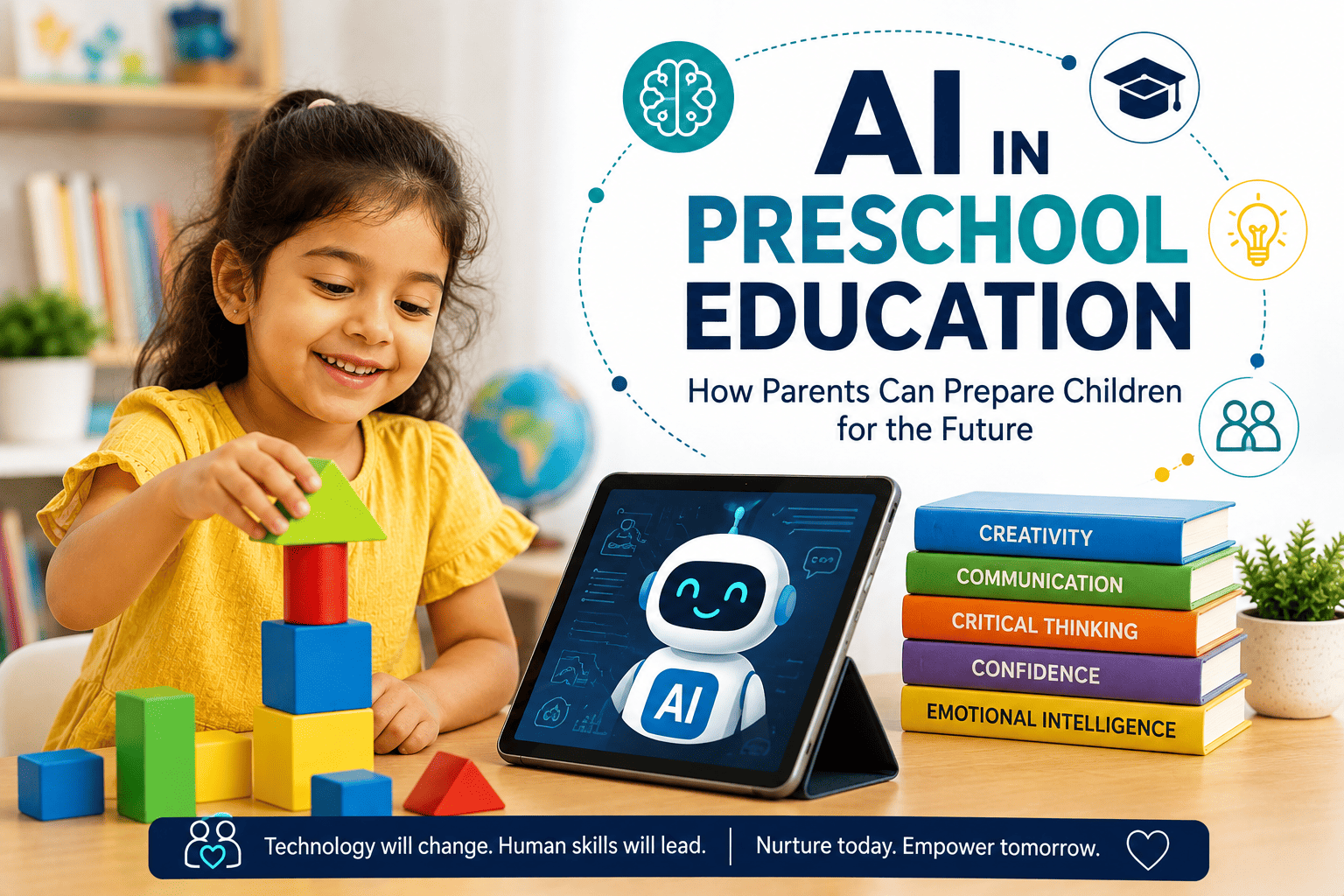
Artificial Intelligence (AI) is transforming industries across the world, and education is no exception. From personalized learning platforms to AI-powered educational tools, technology is becoming an integral part of classrooms. Naturally, many parents are asking an important question:
“How will AI affect my child’s education, and what should I do to prepare them?”
The answer isn’t about introducing coding lessons or AI tools to preschoolers. Instead, it’s about helping children develop the human skills that technology cannot replace. As AI continues to reshape how we learn and work, parents have a unique opportunity to prepare their children for a future where creativity, communication, and emotional intelligence are more valuable than ever.
In this article, we’ll explore how AI in preschool education is influencing early learning and what parents can do today to help their children thrive tomorrow.
Understanding AI in Preschool Education
Artificial Intelligence refers to technology that can perform tasks such as recognizing patterns, answering questions, and supporting learning experiences. In education, AI is already being used to personalize lessons, recommend activities, and provide instant feedback.
For preschoolers, AI is not about replacing teachers or traditional learning. Instead, it can serve as a supportive tool when used appropriately. Interactive learning apps, speech recognition, and adaptive educational games are just a few examples of how AI is entering early childhood education.
However, experts agree that young children still learn best through real-world experiences, meaningful conversations, hands-on activities, and social interactions.
The Future of Education Will Look Different
Children entering preschool today will likely graduate into careers that don’t yet exist. Many routine tasks will be automated, and AI will become a common workplace assistant across industries.
In this changing landscape, academic knowledge alone won’t be enough. Employers and educators are increasingly emphasizing skills that AI cannot easily replicate.
Rather than asking, “Will AI replace teachers?” a better question is:
“What skills will help children succeed alongside AI?”
The answer begins in the preschool years.
Human Skills Will Become More Valuable Than Ever
Technology can provide information instantly, but it cannot replace qualities that make us uniquely human.
Parents should focus on nurturing skills such as:
Communication Skills
Children who can express their ideas confidently, listen actively, and participate in conversations will continue to have an advantage throughout life.
Activities like storytelling, group discussions, role-playing, and drama encourage children to communicate naturally and build confidence.
Creativity and Imagination
AI can generate content, but original ideas still begin with human imagination.
Creative play helps children:
- Think independently
- Explore different possibilities
- Develop innovative thinking
- Build confidence in expressing ideas
Simple activities such as pretend play, drawing, storytelling, and building with blocks stimulate imagination in ways screens cannot.
Critical Thinking
Instead of memorizing answers, children need to learn how to ask thoughtful questions.
Encourage curiosity by asking:
- Why do you think that happened?
- What could we try differently?
- How would you solve this problem?
- What do you think comes next?
These conversations help children become confident thinkers rather than passive learners.
Emotional Intelligence
As AI becomes smarter, emotional intelligence becomes even more important.
Children who understand emotions, empathize with others, and manage relationships effectively are better prepared for school and life.
Parents can build emotional intelligence by:
- Talking about feelings
- Reading stories together
- Encouraging teamwork
- Helping children resolve conflicts calmly
Should Preschoolers Use AI Tools?
Many parents wonder whether they should introduce AI-powered educational apps at an early age.
The answer depends on balance.
Technology can certainly support learning, but it should never replace experiences that are essential for healthy child development.
Young children still need:
- Face-to-face conversations
- Outdoor play
- Physical activities
- Storytelling sessions
- Music and movement
- Creative arts
- Social interactions with peers
AI should complement these experiences—not replace them.
Why Play-Based Learning Matters More Than Ever
One of the biggest misconceptions about future education is that children need to spend more time with technology.
Research consistently shows that play remains one of the most effective ways for young children to learn.
Through play, children naturally develop:
- Communication
- Collaboration
- Confidence
- Problem-solving
- Creativity
- Emotional regulation
These skills prepare children not only for school but also for an AI-powered future where adaptability and innovation will be highly valued.
How Parents Can Prepare Children for an AI-Driven Future
Preparing children for tomorrow doesn’t require expensive gadgets or advanced technology.
Instead, parents can focus on everyday habits that build lifelong skills.
Read Together Every Day
Books expand vocabulary, imagination, listening skills, and comprehension.
Encourage Questions
Celebrate curiosity instead of rushing to provide answers.
Reduce Passive Screen Time
Replace excessive screen use with outdoor activities, family conversations, puzzles, and creative play.
Promote Team Activities
Games, group projects, and role-playing help children develop collaboration and leadership skills.
Celebrate Creativity
Allow children to draw, build, dance, sing, and tell stories without worrying about perfection.
Build Confidence Through Communication
Give children opportunities to speak, present ideas, and express their opinions in everyday situations.
The Role of Parents in Future Learning
Parents don’t need to become AI experts to prepare their children for the future.
What children need most is a supportive environment where they feel encouraged to explore, communicate, imagine, and learn from mistakes.
The goal isn’t to raise children who compete with AI.
It’s to raise children who know how to think creatively, communicate effectively, solve problems, and build meaningful relationships—qualities that technology can support but never replace.
How Helen O’Grady Helps Children Develop Future-Ready Skills
At Helen O’Grady International Preschool, learning extends far beyond academics. Through drama, storytelling, role play, music, and collaborative activities, children naturally develop confidence, communication, creativity, and emotional intelligence.
These experiences nurture the very skills that will remain valuable in an AI-driven world, helping children grow into confident learners who are ready for the future—whatever it may bring.
Final Thoughts
Artificial Intelligence will undoubtedly change education, but it won’t replace the importance of human connection, imagination, and communication.
The future belongs to children who can think critically, collaborate effectively, adapt to change, and express themselves with confidence.
By focusing on these essential life skills from an early age, parents can ensure their children are prepared not just for the classrooms of tomorrow, but for the opportunities of the future.
Whether technology continues to evolve or new innovations emerge, one thing remains constant: children who are confident, creative, and curious will always be ready to succeed.
